
Over Clucking
Mentioned Characters: Kutaka
Story
"Look at the size of this hole in the riverbed! It'll turn into a direct passage between Higan and the Underworld at this rate!"
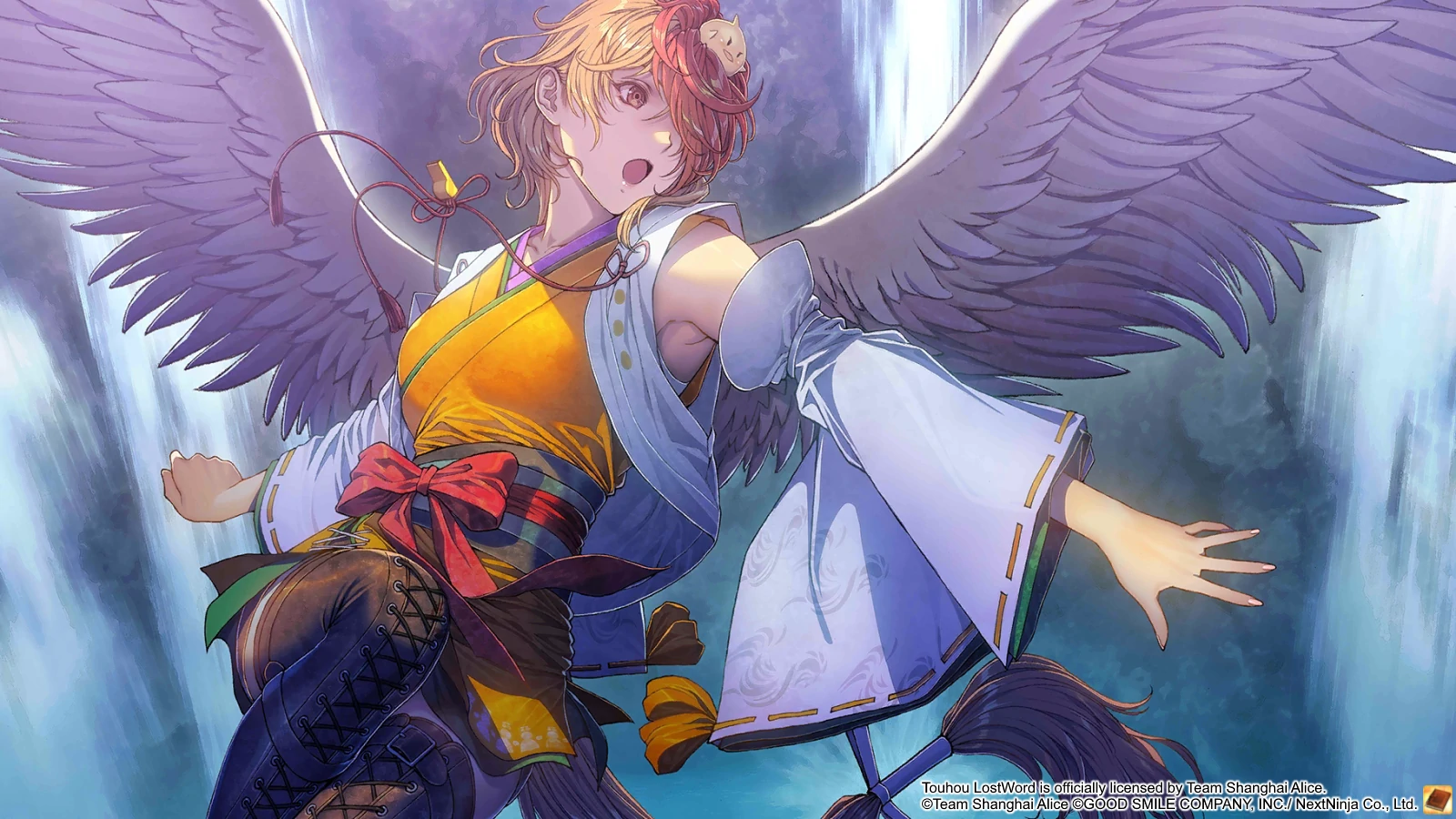
Kutaka Niwatari, gatekeeper of Higan, is also the god responsible for guiding the souls of the dead to their destinations.
Spirits of the dead are Water Phase by nature, and Kutaka's other name, "Mikumari," literally means "one who directs the flow of water." It's only fitting, then, that she's the one who guides souls to where they belong.
So, who's really behind the hole that's opened up in the Sanzu River?
Prolonged Incidents
One way to think of a prolonged incident is as an incident that's essentially become a living organism. The various phenomena and elements it contains function like organs sustaining it, just like actual organs or cells. If that's true, then an incident isn't something that just happens; it's something that grows and multiplies through its relationship with the world around it.
The Prolonged "Petroleum Incident"
Mysterious black water had been welling up from deep underground, staining Gensokyo. It appeared to be petroleum―thick, foul-smelling, and seemingly nothing but a nuisance, though apparently it's very valuable. But the black water was something far darker. It was the pooled resentment of countless creatures who died long ago, built up over time in what was once the Hell of Blood Pools. Some strange beast was even spotted devouring it like a delicacy. But something didn't add up. That shouldn't have caused a hole to open in the bottom of the Sanzu River.
EX Beings
Maybe the "EX Factor" really is nothing more than the ability to prolong incidents. Then again... what even is a "factor," anyway?
Kutaka Niwatari guards the checkpoint at the border between worlds. She's also the god of wild chickens, from before they were ever domesticated, back when chickens could still fly. Silkmoths are an example of another such domesticated creature that can't fly anymore. They apparently once could, so there were probably still flying silkmoths as far back as the mythological era, over a thousand years ago. According to Japanese mythology, Sukunabikona arrived on the shores of what would later become Japan wearing clothing made from a moth's skin, or maybe it was a silkmoth's, since it's easy to mix the two up. Picture that skin acting like a magical robe, letting him fly, and you can see why inchlings are so often conflated with fairies. After all, fairies are usually pictured as tiny, winged creatures too.
As a god who presides over the flow of water, Kutaka could just as easily be interpreted as having power over fate. And that kind of power is a tricky thing. Even those who wield it can't always keep it fully under control, and in some cases, they might not even realize they have it at all.
