

Stargazers
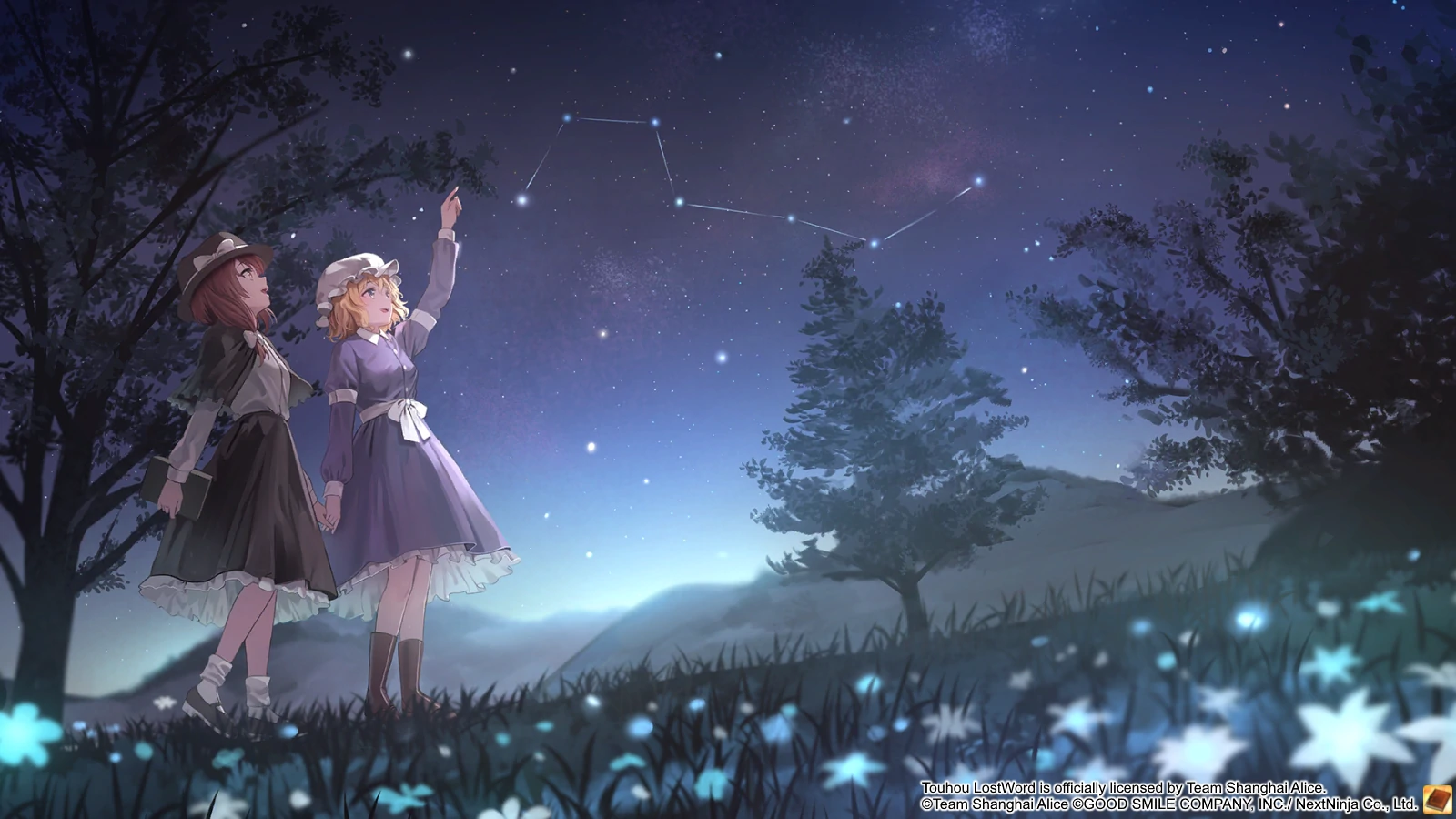
Mentioned Characters: Star, Renko
Story
"Long ago, wolves roamed this land..."
"Yeah, you've told me before. A hundred times. Besides, I'm pretty sure it's common knowledge."
"Not so fast, Merry. There's more to it than that."
"Oh? Do tell."
"Those wolves served as this land's guardian spirits."
"You don't say. So they must've looked up at the Big Dipper too."
"Probably. Though it would've looked a little different back then."
Warm air scatters light, so stars are easier to see on cold nights. However, a little warmth helps the stars twinkle. Like most things, it's all about balance. People often assume the stars look better from mountaintops because the air is cleaner. In truth, it's because there's less artificial light to drown them out. But why do people find starry skies beautiful?
Renko launched into another one of her lectures that both bored and fascinated Merry.
So why do people find starry skies beautiful? The answer is simple. When humans began walking upright, it raised their line of sight, and it became easier for them to look up. For the first time, they could take in the full scope of the starry night sky.
The stars became one of humanity's oldest and most treasured forms of entertainment. At its core, entertainment is all about stimulation. Before anyone ever stopped to ask what the stars meant, the endless patterns they formed across the heavens were already fascinating in their own right. After they learned to stand, human brains grew and began craving that kind of stimulation. The patterns in the night sky gave rise to everything from astrology and calendars to mathematics, physics, and the aesthetic sensibilities behind countless forms of art. That much is as clear as starlight.
"But doesn't that also mean humanity's march toward extinction began right then and there?"
"Wow, Merry. That's awfully pessimistic."
"If you're talking about the origins of civilization, the conversation ends up there eventually."
"Maybe. But I think humans are more proactive than that."
"You're proactive, sure. But humanity hasn't even broken free from Earth's gravity."
"Even the Big Dipper can't escape the gravitational pull of the surrounding stars."
"And one day, the Draco constellation will swallow up Polaris and take its place at the celestial north pole, right? When that happens, humanity will probably be extinct."
"Isn't that a bit of a leap? Besides, I thought the next North Star was going to be Errai from the Gamma Cepheir binary star system?"
"Was it? Oh well. What time is it?"
"Seriously? You didn't bring a watch?"
